
Armenian Wine: The Complete Guide to Areni, Vayots Dzor & the World's Oldest Winery
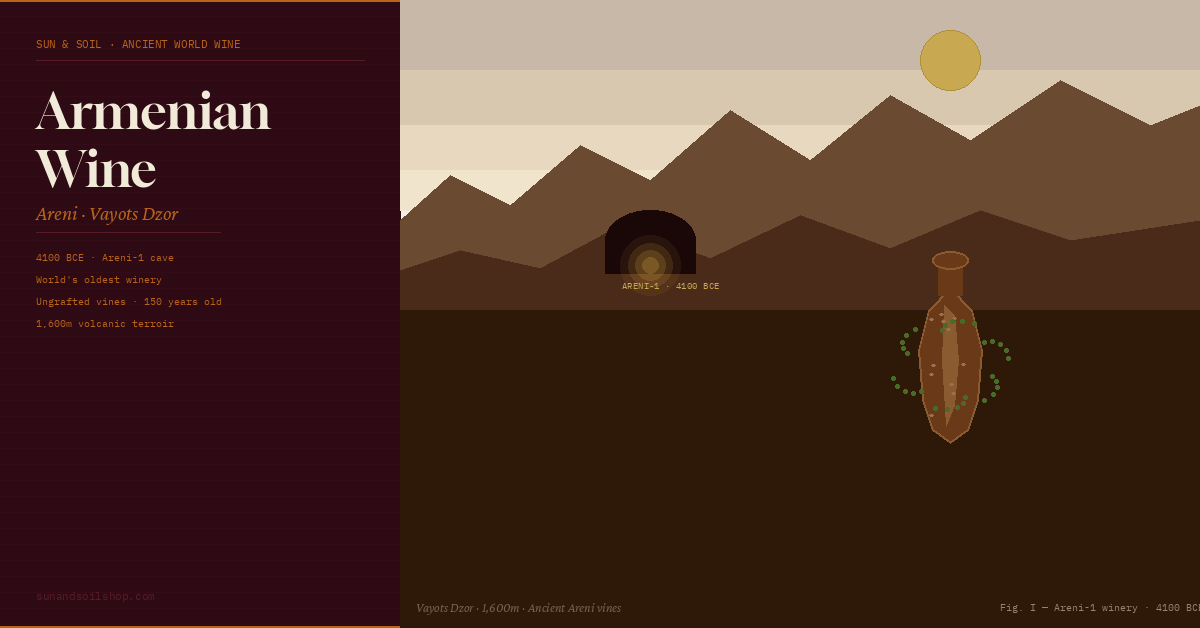
Armenia has one of the most extraordinary wine stories in the world, and almost nobody knows it. In 2007, archaeologists excavating a cave complex in the Vayots Dzor region of southern Armenia uncovered the oldest known winery in the world: a complete wine production facility dating to approximately 4100 BCE, including a wine press, fermentation vats, storage jars, and dried grape seeds and vine stems. The site, known as Areni-1, predates the next oldest confirmed winery by at least 1,000 years. The Areni village that gives both the cave and Armenia’s most important indigenous grape variety their name still stands at the mouth of that cave. The same family of grapes being pressed in 4100 BCE is being pressed today by producers like Zulal and Tarllc, in vineyards less than a kilometre away.
This is not incidental history. It is the central fact of Armenian wine: a continuous winemaking tradition going back more than six thousand years, unbroken by the various empires, invasions, and upheavals that have swept across the South Caucasus. The natural wine generation of the 2010s and 2020s has turned a slow post-Soviet recovery into something genuinely exciting: small producers working with ancient indigenous varieties, ungrafted vines, and zero-intervention winemaking, producing wines that taste like nowhere else on earth.
Armenia and the Origins of Wine
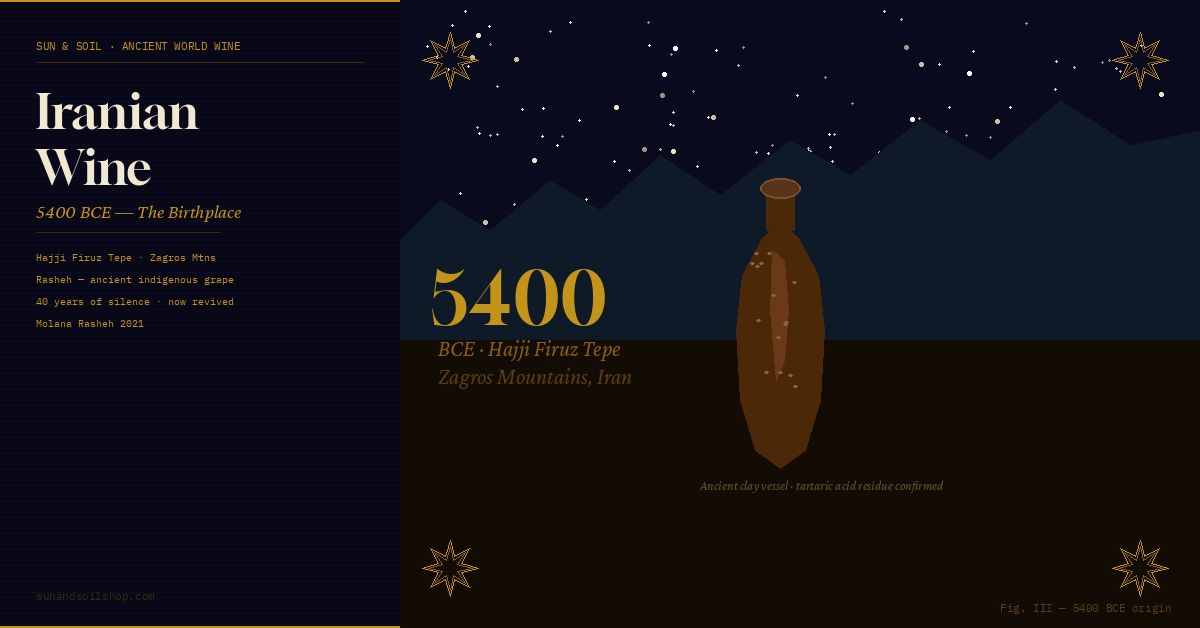
The Areni-1 discovery placed Armenia at the centre of wine’s origin story. The South Caucasus region — encompassing modern Armenia, Georgia, and Azerbaijan — is now understood by most archaeologists and geneticists to be the geographical origin of viticulture: the place where wild Vitis vinifera was first domesticated and wine was first deliberately produced. The Hajji Firuz Tepe evidence from Iran (5400 BCE) and the Areni-1 evidence from Armenia (4100 BCE, a complete winery) together establish the South Caucasus corridor as the cradle of wine civilization.
What makes Areni-1 remarkable is not just its age but its completeness. The archaeologists found everything: a shallow basin used to tread grapes, a vat to collect the juice, clay storage jars still stained with tartaric acid residue, dried grape seeds of a cultivated variety, and vine stems. Someone in 4100 BCE was pressing grapes, fermenting the juice in clay vessels, and storing the wine in a cool cave — the same basic sequence that producers in the same valley are following today.
The Vayots Dzor Region
Vayots Dzor is a mountainous province in southern Armenia, on the border with Iran and Azerbaijan. It is Armenia’s most important wine-producing region, home to the Areni-1 cave and the high-altitude vineyards that produce the country’s most distinctive wines.
The key viticultural fact about Vayots Dzor is altitude. The valley floor sits at roughly 900 metres above sea level, and the best vineyards climb considerably higher — the Tarllc “061” vineyards sit at approximately 1,600 metres. At this elevation, the climate is genuinely continental: hot, sunny summers with dramatic temperature drops at night. The diurnal variation can exceed 20 degrees Celsius in summer, which produces wines of great freshness, concentration, and aromatic complexity.
The soils are predominantly volcanic: basalt and tuff over limestone bedrock. Basalt soils produce wines of distinctive mineral character — an iron-mineral depth immediately identifiable once you know it. Much of the old Areni in Vayots Dzor grows ungrafted — on its own roots, because phylloxera never reached these remote high-altitude valleys. The Tarllc “061” vineyards are among the most extreme: ungrafted vines averaging 150 years old at 1,600 metres in volcanic soil.
The Areni Grape
Areni (also Sev Areni — “Sev” meaning black in Armenian) is Armenia’s most important indigenous red variety and one of the oldest continuously cultivated wine grapes in the world. It produces wines of deep color, high natural acidity, and a flavor profile centered on pomegranate, red cherry, and dried herbs, with tannins that are firm but refined — more Pinot Noir in structure than Cabernet Sauvignon, despite the concentration of fruit.
The acidity is one of Areni’s defining characteristics. At high altitude in volcanic soil, the grape retains natural acidity even when fully ripe — making the wines genuinely age-worthy and food-friendly. A well-made Areni from a good vintage can age for ten to fifteen years, developing dried fruit, leather, forest floor, and iron mineral complexity usually associated with much more expensive European appellations.
Beyond Areni, Armenia has a remarkable portfolio of indigenous varieties — Voskehat (white), Kakhet, Koghbeni, Tozot, Nazeli — most found nowhere else in the world. Zulal is one of the most important producers working to document and vinify these rare varieties. The work of preserving them is genuinely urgent.
From Our Armenian Cellar
The accessible expression
Zulal Areni Red 2021 · Armenia (Vayots Dzor) · $27
Zulal was founded in 2017 by Aimee Keushguerian — one of the most important figures in the revival of Armenian wine internationally. The name means “pure” in Armenian. Sourced from approximately 40 small family growers in Aghavnadzor and Rind in Vayots Dzor. The 2021 Areni is aromatic and medium-bodied: pomegranate and red cherry on the nose, pepper and dried herbs on the palate, fresh acidity, and fine mineral character from the volcanic soil. The most immediately approachable Armenian wine in our range. Serve slightly cool, with grilled lamb or aubergine.
The extreme expression — 150-year-old vines at 1,600m
Tarllc “061” Vayots Dzor Red · Armenia (Vayots Dzor, 1,600m) · $30
Tarllc is the project of Aaron Rawlins and Maral Sarian, dedicated to preserving ancient Armenian vineyards. The “061” is 100% Sev Areni from a plateau at 1,600 metres, grown on ungrafted vines averaging 150 years old. Zero additions, zero subtractions. Big, bold, and earthy: stewed dark fruits, iron-like minerality, dried herbs, and a complex depth the team describes as “old library books.” Decant for at least an hour, or cellar for five to eight years.
Browse our full ancient world wine selection →
Frequently Asked Questions
Is Armenia the birthplace of wine?
Armenia is a very strong contender. The Areni-1 cave complex in Vayots Dzor, dated to approximately 4100 BCE, is the oldest known complete winery in the world — containing a wine press, fermentation vats, storage jars, and cultivated grape seeds. Combined with the Iranian evidence from Hajji Firuz Tepe (5400 BCE), the South Caucasus region is now understood to be the cradle of wine civilisation.
What does Armenian wine taste like?
Armenian Areni has a distinctive profile: pomegranate, red cherry, and dried herbs; medium to full body; high natural acidity; firm but fine tannins; and deep iron-mineral character from volcanic basalt soils. More similar in structure to Pinot Noir than Cabernet — refined, not heavy — but with an earthy, mineral quality that is entirely its own.
What is the Areni grape?
Areni (Sev Areni) is Armenia’s most important indigenous red grape, cultivated continuously in Vayots Dzor for at least six thousand years. High natural acidity, concentrated fruit, firm tannins, and deep mineral character. Many vines are ungrafted — on their original roots, because phylloxera never reached these remote valleys. The oldest, like those used by Tarllc, are 150 years old or more.
Where is Armenian wine made?
Almost all quality natural Armenian wine comes from the Vayots Dzor province in southern Armenia, at 900 to 1,600 metres above sea level, with volcanic soils and a continental climate. It is home to the Areni-1 cave — the oldest winery in the world.
Go deeper: Iranian wine — the birthplace of viticulture · Georgian wine — the 8,000-year qvevri tradition · Saperavi — Georgia’s greatest red grape · Lebanese wine — Merweh and the Bekaa Valley