
Natural Wine for Beginners: The Complete Guide to Getting Started
Natural wine can be intimidating at first, not because it is technically complex to understand, but because the conversation around it often assumes knowledge that most people do not have, and because natural wine itself can taste different from what most people expect wine to taste like. It can be cloudy. It can have bubbles you did not expect. It can taste funky, alive, and slightly unpredictable in ways that polished commercial wine never is. Some of these qualities are features; some are acquired tastes. Knowing the difference is what this guide is for.
The single most important thing to understand about natural wine as a beginner is this: it is not a category defined by what it contains or what it tastes like, but by what it does not do. Natural wine does not intervene. It does not correct. It does not standardize. It takes whatever happened in the vineyard and the cellar and puts it in the bottle without adjustment. The result is wine that is more variable, more distinctive, and more specific to its origin than commercial wine. Sometimes it is also more interesting and more delicious. Sometimes it takes getting used to. Usually both.
This guide is for anyone who is curious about natural wine and wants to know how to start: what natural wine is, what to expect when you taste it, how to find good bottles, what to drink first, and how to build from there.
What Is Natural Wine, Exactly?
Natural wine does not have a single, legally recognised definition, a fact that causes some confusion but is not really a problem once you understand the philosophy. The term describes an approach to winemaking rather than a specific set of rules. Different natural winemakers observe slightly different self-imposed standards, but most share the following principles:
Organic or biodynamic farming. The grapes are grown without synthetic pesticides, herbicides, or fertilizers. Many natural wine producers farm biodynamically: a stricter, more holistic system that treats the vineyard as part of a living ecosystem and uses specific preparations to stimulate soil microbial life.
Hand harvesting. Grapes are picked by hand rather than machine. This allows selective harvesting of only ripe, healthy grapes, and avoids the physical damage that mechanical harvesting causes.
Wild yeast fermentation. Commercial wine uses laboratory-cultivated yeast strains selected for predictable, consistent fermentation. Natural wine uses only the wild yeasts naturally present on the grape skins and in the cellar: organisms that are specific to the place and contribute to the wine's distinctive character.
No or minimal additions in the cellar. Commercial winemaking permits dozens of additions including commercial yeasts, sulfur dioxide, tartaric acid, grape concentrate, tannin powder, and other legal inputs that adjust the wine's flavor, stability, and appearance. Natural winemakers avoid these, or use them in the smallest possible quantities.
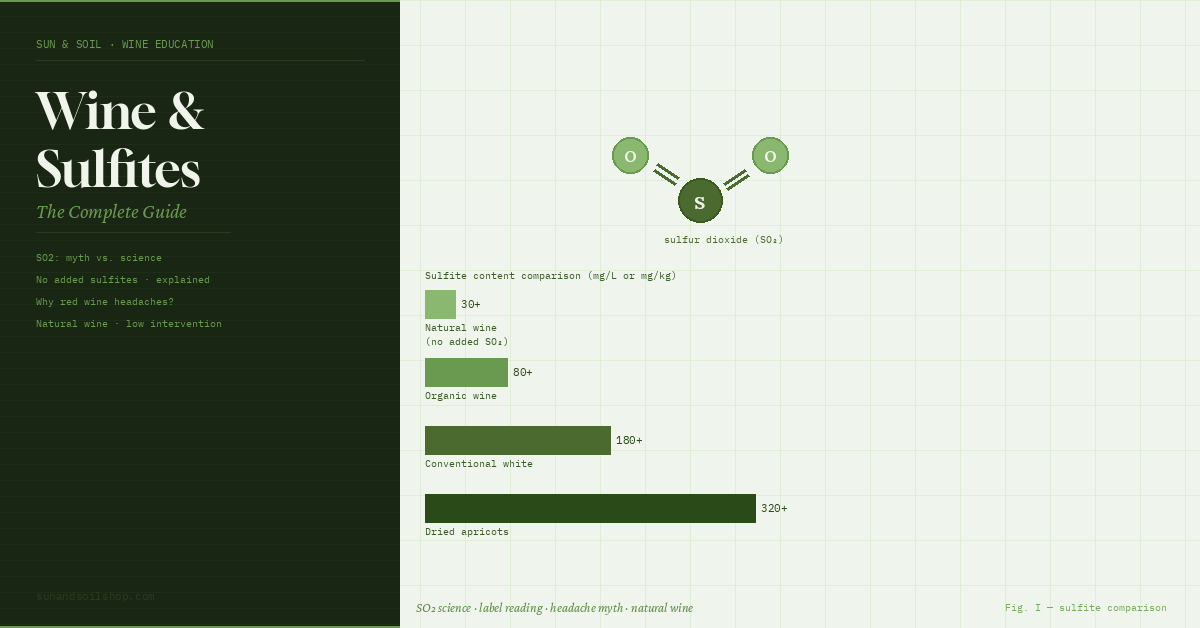
No or minimal sulfur dioxide. Sulfur dioxide (SO2) is the most common wine additive, used to preserve freshness and prevent oxidation. Natural winemakers typically add very little or no SO2, resulting in wines that are more vulnerable to oxidation and temperature changes but express their terroir more clearly. All wine contains some naturally occurring sulfites from fermentation: "no added sulfites" does not mean literally sulfite-free.
No fining or filtration. Commercial wine is typically fined (cleared of suspended particles) and filtered before bottling. Natural wine is usually neither fined nor filtered, which is why it may be cloudy, hazy, or contain sediment.
The result of these practices is wine that behaves differently from commercial wine. It may look different: hazy or cloudy rather than crystal clear. It may smell different: more complex, wilder, with earthy or funky notes alongside the fruit. It may taste different: more textured, more alive, more specific to its grape and place. It will almost certainly vary from vintage to vintage in ways that commercial wine, which is engineered for consistency, does not.
Why Natural Wine Tastes Different
Understanding why natural wine tastes different from commercial wine makes the differences less surprising and more interesting.
Wild yeast complexity. Commercial wine yeast strains are selected for efficiency, predictability, and specific aromatic profiles: fruit-forward, clean, consistent. Wild yeasts are a complex community of different organisms, each contributing different aromatic compounds to the finished wine. The result is more aromatic complexity, more texture, and more character. It also means more variability: the same producer making the same wine in two different vintages will show different wild yeast communities at work.
Reduced sulfur dioxide. SO2 at higher concentrations masks some aromatic compounds. Natural wine, with little or no added SO2, allows the full aromatic expression of the grape and terroir to come through, including compounds that commercial winemaking would suppress or correct.
No corrections. Commercial winemaking corrects a wide range of problems: insufficient acidity is fixed with tartaric acid; insufficient color with concentration techniques; insufficient body with oak chips or added tannin. Natural wine is whatever the vineyard and vintage produced. In a difficult year, natural wine may be thin, acidic, or austere. In a great year, it may be extraordinary. The variation is part of the point.
Terroir expression. All of the above, wild yeast, minimal SO2, no corrections, means that natural wine tastes more specifically of its place than commercial wine. The mineral character of volcanic basalt soil in Armenia, the saline marine quality of limestone cliffs in Liguria, the white pepper and mineral depth of Gruner Veltliner on Burgenland's biodynamic basalt: all of these register more clearly in natural wine than in commercial equivalents from the same regions.
The "funk factor." Some natural wines have notes that conventional wine training would categorize as faults: brett (a slightly funky, barnyard quality), slight volatility (a vinegary edge), or petillance (unexpected bubbles). At low levels, many experienced natural wine drinkers find these qualities interesting rather than defective. At high levels, they can be genuinely unpleasant. Learning to distinguish "interesting complexity" from "actual fault" is part of the natural wine learning curve, and one that most people navigate easily with a little exposure.
What to Expect When You Open a Natural Wine
A few practical things that might surprise first-time natural wine drinkers:
The wine may be cloudy or hazy. Natural wine is typically unfiltered, which means it may contain suspended particles that make it look less than crystal clear. This is not a flaw. A light haze or cloudiness in natural wine is usually a sign that the wine has been minimally processed. Sediment at the bottom of the bottle is equally normal.
There may be slight bubbles. Some natural wines continue to ferment very slightly in the bottle. A slight spritz or prickle on the tongue is completely normal in natural white wine and some reds. It is not a sign that the wine is bad or has been accidentally carbonated.
The colour may be unexpected. Natural orange wines, white wines made with skin contact, are amber or copper-colored rather than pale yellow or gold. This surprises people who expect white wine to look white. Natural red wines may be paler than expected, particularly if made with short maceration or from lighter varieties like Cinsaut.
The wine may smell different from what you expect. Natural wine aromatics can include earthy, fermentation-derived notes, slight funkiness, and more complex savory notes alongside the fruit. These are not faults at moderate levels. They are part of the character of wine made from wild yeast in minimal-intervention cellars.
Temperature matters more. Natural wine without added SO2 is more sensitive to temperature than commercial wine. Store it cool, ideally 12-14 degrees Celsius, and drink it within a shorter window after opening. Natural whites are best within a few hours of opening; natural reds within 1-2 days.
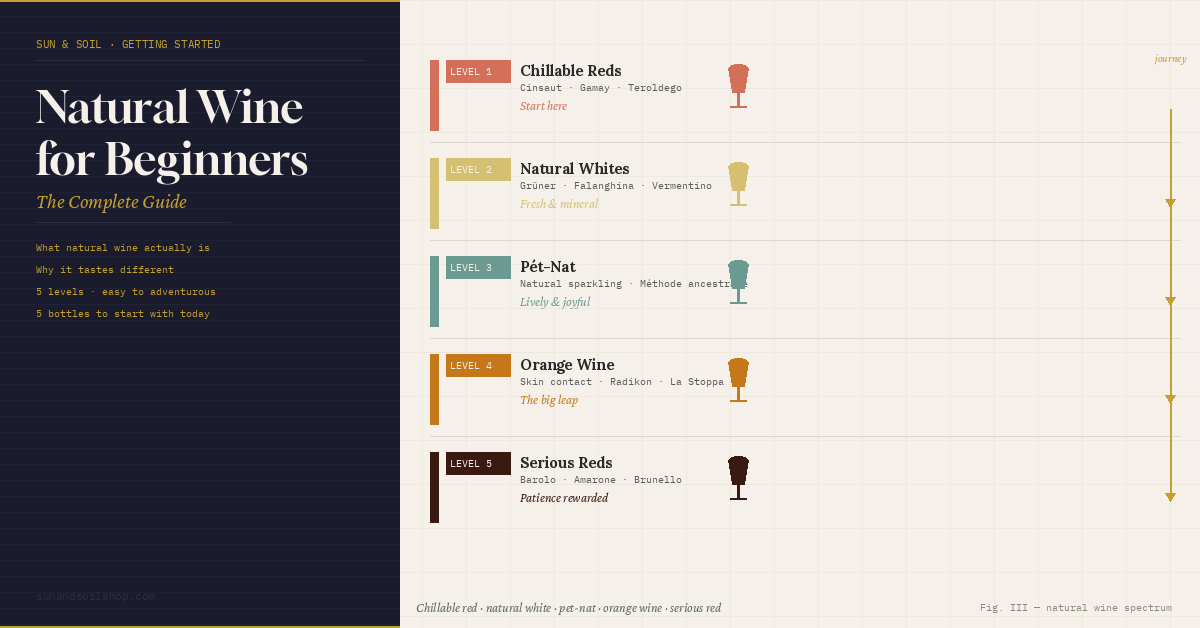
The Natural Wine Spectrum: From Easy to Adventurous
Natural wine is not a single style. It spans an enormous range from light and immediately approachable to challenging, acquired-taste experiences. Understanding this spectrum helps you choose where to start.
Level 1: Chillable reds
The easiest natural wines to enjoy immediately are light reds designed to be served slightly cool, somewhere between red wine temperature and white wine temperature. These wines have minimal tannin, high freshness, and a fruit-forward, easy-drinking character that makes them immediately appealing. Key varieties: Gamay (from Beaujolais and the Loire), Cinsaut (from Lebanon and the Languedoc), Schiava and Teroldego (from Trentino), and lighter expressions of Pinot Noir.
Level 2: Natural whites
Natural white wines made without skin contact are broadly similar in style to conventional white wine, same approximate color range, similar aromatic character, but with an extra dimension of mineral precision and freshness that wild yeast and minimal intervention consistently deliver. These are excellent transition wines for people moving from conventional to natural wine. Key varieties: Gruner Veltliner (Austria), Muscadet and Chenin Blanc (Loire), Vermentino (Liguria), Falanghina (Campania), Moschofilero (Greece).
Level 3: Pet-Nat
Petillant naturel is the natural wine world's sparkling wine, bottled mid-fermentation using the ancestral method, without disgorgement or dosage. Often hazy, always alive with natural bubbles, fruit-forward and refreshing. Pet-Nat is one of the most immediately pleasurable natural wine styles and one of the most fun to share at a table.
Level 4: Orange wine
Orange wine is where many people find the biggest adjustment. White grapes fermented with extended skin contact produce wines that are amber or copper rather than pale yellow, with tannins and texture usually associated with red wine, and aromatic profiles that include dried fruit, nuts, spice, and oxidative notes alongside the fruit. The first time you taste a good orange wine, it may be strange. By the third time, you may find it hard to drink conventional white wine without feeling like something is missing.
Level 5: Serious natural reds
Natural Barolo, natural Amarone, natural Brunello: wines that require patience, decanting, and time. These are not beginner wines, but they are the eventual destination for anyone who takes natural wine seriously. The best examples are among the most complex and age-worthy wines made anywhere in the world.
The Five Bottles to Start With
If you are new to natural wine and want a structured way to explore, these five bottles from our cellar represent the best starting points: wines that are excellent, approachable, and each illuminate a different aspect of what natural wine can be.
The chillable red: start here
Lebnani Ahmar Natural Red 2023 1L · Lebanon (Bekaa Valley) · $27
100% Cinsaut from 1,200 metres elevation in the Bekaa Valley. Native yeast, concrete tank, no additions. Pomegranate, red cherry, dried herbs, floral lift. Serve slightly chilled. This is natural wine at its most immediately accessible: an hour in the fridge, a glass at the table, and the question of what natural wine tastes like answers itself. Also a liter bottle, which means more to share.
The natural white: mineral and alive
Meinklang Gruner Veltliner 2024 · Austria (Burgenland)
From the Demeter-certified biodynamic Meinklang farm on the shores of Lake Neusiedl. White pepper, citrus, mineral precision. This is the wine that makes the clearest possible argument for biodynamic farming: it tastes more alive, more specific, and more mineral than conventionally farmed Gruner Veltliner from the same region. The white wine equivalent of turning up the resolution on a photograph.
The pet-nat: natural sparkling joy
Domaine Moutard Pet Mout Rose Pet-Nat · France (Champagne region) · $23
Methode ancestrale rose from a multigenerational Champagne house. Hazy, lively, fruit-forward, delicious. Serve cold, open carefully, pour immediately. This is what pet-nat is supposed to be: unpretentious, joyful, and completely at home at any table. The best introduction to natural sparkling wine we know.
The orange wine: the big leap
La Stoppa Ageno Bianco 2020 · Emilia-Romagna · $64
One of the great natural wines of Italy. 90% Malvasia di Candia with Ortrugo and Trebbiano. Four months skin maceration. Two years in large oak. No filtration, no sulfur. This is the orange wine that most clearly demonstrates why people who love orange wine love orange wine. Open it an hour before serving, have it alongside food, and give it the attention it deserves.
The ancient world wine: history in a glass
Casreli "Erekle's Wine" Qvevri Dry Amber, Kakheti 2021 · Georgia (Kakheti)
Georgian wine made in qvevri, buried clay vessels, in the method practiced in this valley for 8,000 years. No additions. No modern technology. Wild yeast. Skin contact. Amber in colour, tannic in structure, with dried fruit, mineral depth, and a character that is completely unlike any wine from the conventional world. Drink it alongside spiced lamb, walnut dishes, or aged cheese, and understand why Georgian winemaking needs no improvement.
How to Read a Natural Wine Label
Producer name: In natural wine, the producer is usually the most important signal of quality. A few names, Radikon, Foradori, La Stoppa, Meinklang, Gut Oggau, are reliable guarantees of a specific quality and philosophy. Learning the producers is more useful than learning the appellations.
"No added sulfites": Means no SO2 has been added at any stage. A genuine signal of minimal intervention. Does not mean literally sulfite-free since all wine contains naturally occurring sulfites from fermentation.
Certifications: Demeter (biodynamic) and Biodyvin are the most meaningful certifications. EU organic certification is a minimum baseline, better than nothing but less meaningful than biodynamic certification for understanding a wine's philosophy.
Appellation vs IGT or Vin de France: Many natural winemakers declassify their wines to the lowest regional classification to escape appellation rules that conflict with their philosophy. A "Vin de France" label does not mean low quality; it may mean the winemaker chose freedom over appellation recognition.
Vintage variation: Natural wine varies significantly from vintage to vintage. This is not inconsistency; it is the natural consequence of not correcting for weather variation. Two vintages of the same wine from the same producer can taste quite different. This is part of what makes natural wine interesting.
Natural Wine and Food
Natural wine is, almost without exception, wine that belongs at the table with food. The qualities that make some natural wine challenging to drink alone, high acidity, tannin from skin contact, slight oxidative notes, earthiness, become assets alongside food. The acidity cuts through fat; the tannin amplifies savory flavors; the earthiness complements the earthiness of good cooking.
Chillable natural reds with charcuterie, grilled chicken, light pasta, or simple cheese boards. Serve at 14-16 degrees Celsius, colder than conventional red wine.
Natural whites with fish, seafood, vegetables, light pasta, and dishes with herbs. The mineral acidity of natural white is one of the best companions for anything that benefits from a squeeze of lemon.
Orange wines with the kinds of food that usually defeat wine: spiced dishes, fermented foods (kimchi, miso, aged cheese), rich or fatty dishes, and cuisines from Georgia, Lebanon, Japan, and Southeast Asia. The tannin and texture of orange wine handles what conventional white cannot.
Pet-Nat with almost everything: fried food, seafood, charcuterie, cheese, or as an aperitif on its own. The bubbles and acidity make it one of the most food-versatile wine styles there is.
Browse our full natural wine selection
Frequently Asked Questions: Natural Wine for Beginners
What does natural wine taste like for beginners?
Natural wine tastes more specifically of its place and grape variety than commercial wine: more mineral, more textured, more complex at its best, and occasionally more challenging. The easiest natural wines to start with are light reds served slightly cool (Cinsaut, Gamay) and fresh natural whites (Gruner Veltliner, Falanghina). More demanding styles, orange wine and funky natural reds, are acquired tastes that most people develop with exposure rather than immediately.
Why is natural wine sometimes cloudy?
Natural wine is typically unfiltered, meaning winemakers do not remove suspended particles (yeast, grape solids) before bottling. The result is a slight haze or cloudiness that is entirely normal and has no effect on the wine's quality or flavor. A light haze in natural wine is usually a sign of minimal processing, not a defect.
Is natural wine better for you?
Natural wine typically contains lower levels of sulfur dioxide, lower pesticide residues from organic or biodynamic farming, and no added sugars or synthetic additives. Whether these differences translate to measurable health benefits has not been rigorously studied. Many people report fewer headaches and less next-day discomfort with natural wine. Natural wine is still wine and contains alcohol, which has well-documented health effects regardless of how naturally it was produced.
How much does natural wine cost?
Natural wine spans the full price range from around $18 to well over $100. Entry points like La Rivolta Falanghina ($19), Lebnani Ahmar ($27), and Domaine Moutard Pet-Nat ($23) offer genuine natural wine at accessible prices. The middle range ($30-$60) contains some of the best value in the natural wine world. The top end, including aged Brunello and exceptional Amarone, can reach hundreds of dollars.
What is the difference between natural wine and organic wine?
Organic wine is made from organically farmed grapes with no synthetic pesticides or fertilizers. This is necessary for natural wine but not sufficient. Natural wine additionally requires wild yeast fermentation, minimal additions in the cellar, and minimal or no sulfur dioxide. Many organic wines use commercial yeast, add SO2 at legal organic limits, and fine and filter in ways that natural winemakers avoid. Organic certification is the floor; natural wine philosophy builds significantly above it.
What is biodynamic wine?
Biodynamic wine is made from grapes farmed according to Rudolf Steiner's biodynamic agricultural philosophy: a holistic system that treats the farm as a living ecosystem, uses specific preparations to stimulate soil microbial life, and schedules farming operations according to natural rhythms including the lunar calendar. All biodynamic wine is organically farmed; biodynamic certification (Demeter) imposes stricter standards than organic certification. Most serious natural winemakers farm biodynamically or apply biodynamic principles without formal certification.
How should I store natural wine?
Natural wine without added sulfur dioxide is more sensitive to temperature and oxidation than conventional wine. Store it cool (12-15 degrees Celsius if possible) and away from light. Drink whites and pet-nats within 1-3 years of vintage as a general rule; serious natural reds (Barolo, Brunello, Amarone) can age for a decade or more. Once opened, natural wine is best consumed within a few hours to a day for whites and pet-nats; natural reds can hold for 1-2 days. Refrigerate opened natural wine.
What is the best natural wine for beginners?
The best starting points are wines that are immediately approachable without requiring adjustment to unusual flavours. Our recommendations: a chillable natural red (Lebnani Ahmar, $27, serve slightly cool); a fresh natural white (Meinklang Gruner Veltliner, or La Rivolta Falanghina at $19); and a pet-nat (Domaine Moutard Pet Mout Rose, $23, lively and fruit-forward). These three styles cover the accessible end of the natural wine spectrum and give a clear picture of what makes natural wine different from and more interesting than conventional wine.
Go deeper: What is natural wine? The encyclopedia-level guide · Wine without sulfites: the complete guide · Biodynamic wine: what it is and why it matters · Orange wine food pairing: the complete guide · Pet-Nat: the complete guide to natural sparkling wine