
The Ultimate Guide to Orange Wine: History, Production & The Best Bottles
If you have visited a trendy wine bar in New York, London, or Tokyo recently, you have likely seen a section on the wine list labeled "Orange" or "Skin Contact."
To the uninitiated, it looks like a mistake. Is it cider? Is it a cocktail? Is it made from actual oranges?
No. It is wine. And it is not a new fad. It is the oldest way of making wine on planet Earth.
At Sun & Soil, we specialize in the wines of the Ancient World. To understand the wines of Georgia, Slovenia, and Croatia, you must understand Orange Wine. It is the thread that connects the history of the East to the modern tables of the West.
This is the comprehensive guide to the style that is rewriting the rules of modern drinking.
What is Orange Wine, Technically?
To understand Orange wine, you have to forget the color and think about the skins.
Winemaking is defined by what you do with the grape skins.
-
White Wine: White grapes are harvested and pressed. The juice is separated from the skins immediately. Only the clear juice is fermented.
-
Result: Clean, crisp, fruity wine with no tannins.
-
-
Red Wine: Red grapes are crushed. The juice ferments together with the skins. The alcohol extracts color, flavor, and tannin from the skins.
-
Result: Dark, structured, tannic wine.
-
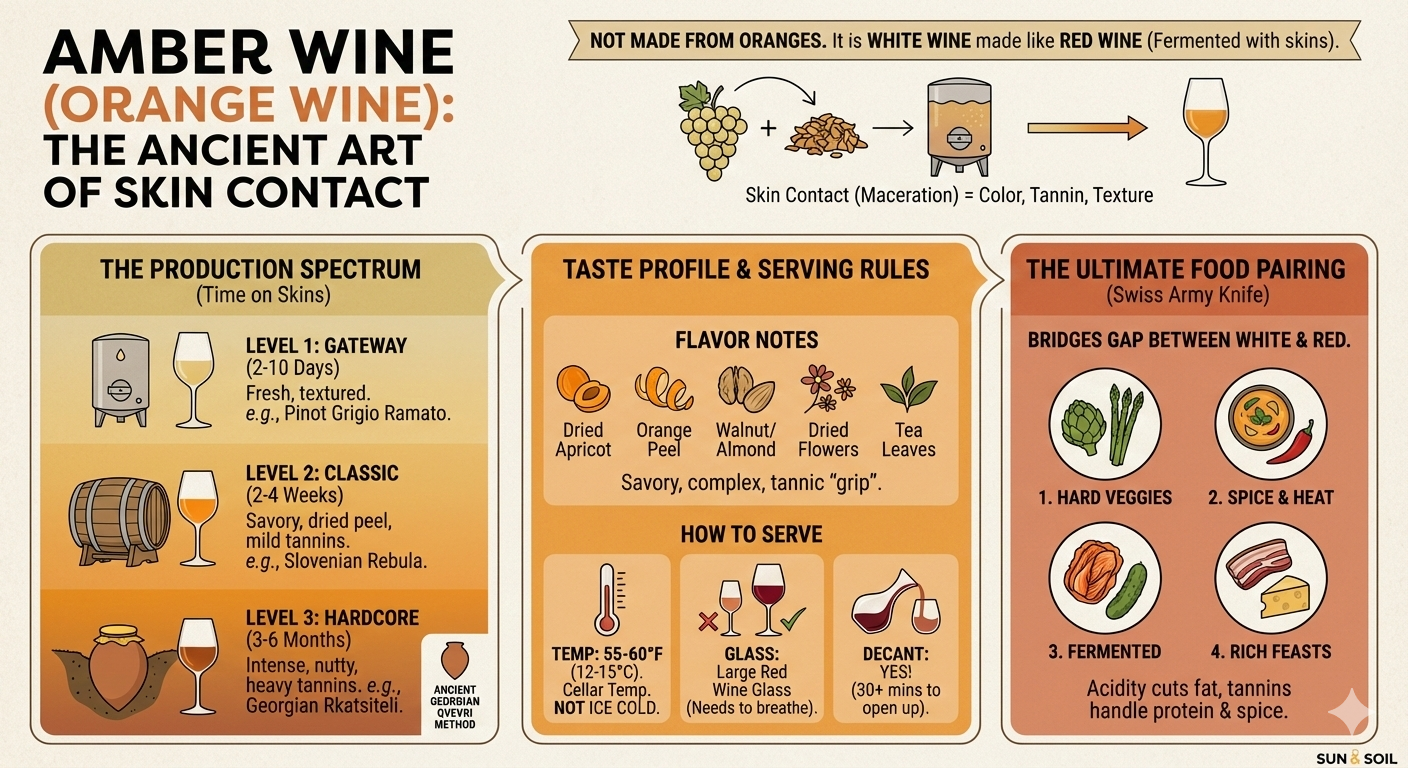
Orange Wine (Skin Contact Wine) is simply white grapes treated like red grapes.
The winemaker takes white grapes (like Rkatsiteli or Pinot Grigio), crushes them, and leaves the juice to ferment with the skins, seeds, and sometimes stems. This period of contact—called maceration—can last for a few days, a few months, or even years.
The Transformation: During this time, the skins release:
-
Pigment: Turning the wine gold, amber, or copper.
-
Tannins: Giving the wine a "grip" or dryness similar to red wine.
-
Phenols: Adding intense savory, nutty, and herbal flavors.
The Result: A wine that has the acidity of a white, but the structure and complexity of a red.
The History
The history of Orange wine is not a straight line. It is a story of an ancient tradition that was nearly destroyed, only to be saved by a handful of rebels.
🇬🇪 1. THE ORIGIN: Georgia (8,000 Years Ago)
This is where it all began. In the Caucasus Mountains, "Orange" wine isn't a style; it's just wine. They call it Amber Wine (Karvisperi ghvino).
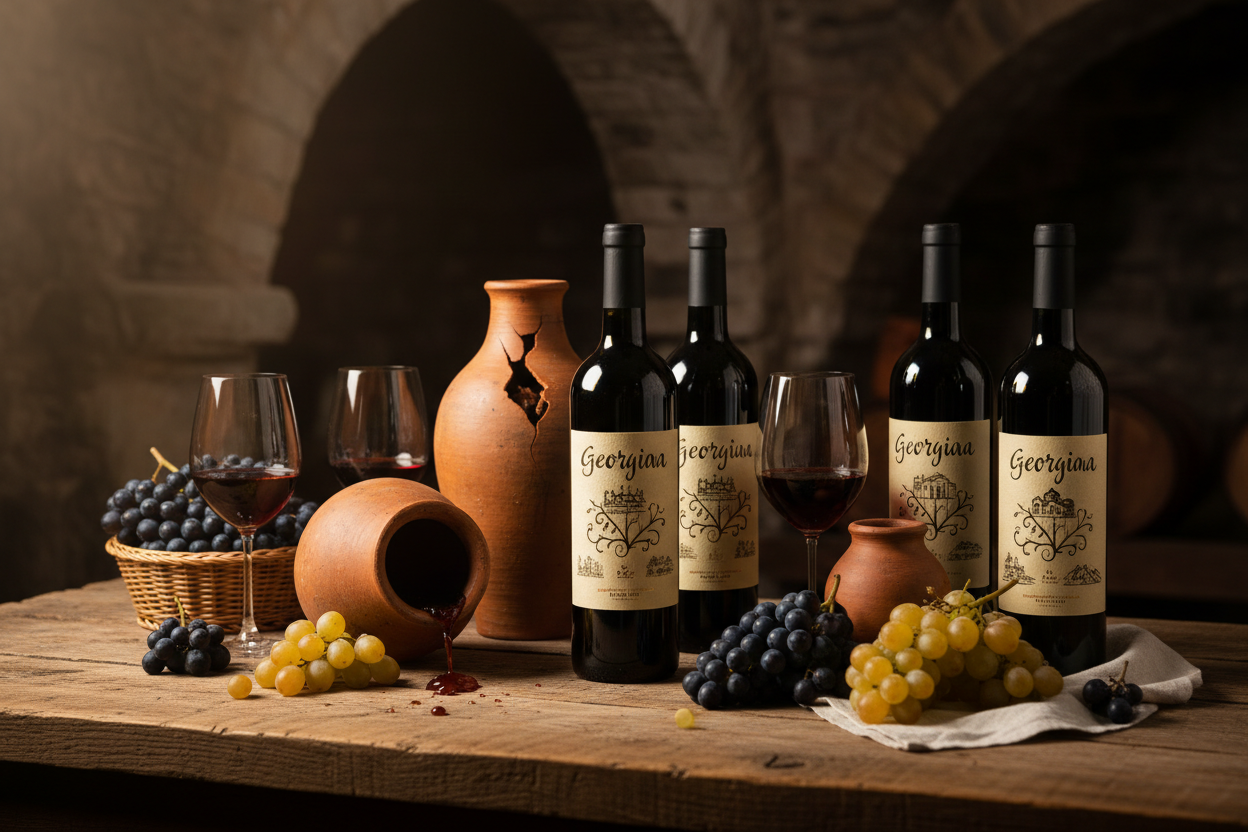
Since the Neolithic era (6000 BC), Georgians have used massive egg-shaped clay vessels called Qvevri.
-
The Process: Grapes are crushed and poured into the Qvevri—juice, skins, stalks, and all. The vessel is buried underground to keep it cool naturally. It is sealed with clay and beeswax and left for 6 months (often from harvest until spring).
-
The Survival: During the Soviet era, the USSR demanded mass-produced "factory wine." They paved over vineyards and destroyed Qvevris. Families kept the tradition alive in secret, burying Qvevris in their basements to make wine for weddings and funerals.
-
The Grape: The king of Georgian amber wine is Rkatsiteli, which produces deep, tannic, walnut-scented wines.
Read More: The Encyclopedia of Georgian Grapes
🇸🇮🇮🇹 2. THE REVIVAL: Slovenia & Italy (The 1990s)
By the mid-20th century, the world had forgotten about skin contact. Everyone wanted clean, industrial Pinot Grigio.
Then came Joško Gravner.
Gravner was a famous winemaker on the border of Italy (Collio) and Slovenia (Brda). In the 1990s, he grew tired of modern, chemical winemaking. He felt his wines had no soul. He traveled to Georgia, saw the ancient Qvevri tradition, and had an epiphany.
He brought the technique back to the borderlands. He, along with Slovenian legends like Aleks Klinec and Marjan Simčič, began making white wines with long skin maceration in large wooden barrels and clay pots.
-
The Effect: At first, people thought the wines were spoiled. They were cloudy and brown. But sommeliers realized these wines were profound. They dubbed the style "Orange Wine" (a term coined by British importer David Harvey in 2004), and the modern revolution was born.
-
The Grape: The star here is Ribolla Gialla (Rebula), a grape with thick skins that loves maceration.
🇭🇷 3. THE COAST: Croatia (The Island Tradition)
While Georgia has the mountains and Slovenia has the hills, Croatia has the sea.
On the islands of the Adriatic, families have made skin-contact wine for generations, often calling it distinct local names. Unlike the heavy, tannic Georgian wines, Croatian orange wines are often influenced by the sea breeze.
-
The Grapes: Malvazija Istriana (in the north) and Pošip (in the south) are perfect for skin contact. The thick skins of Malvazija produce wines that smell of acacia flowers, apricot, and sea salt.
Flavor Spectrum
Not all Orange wines taste the same. It depends on how long the juice touches the skins.
Level 1: "The Gateway" (2–10 Days on Skins)
-
Color: Deep gold or light copper.
-
Taste: Still tastes like fresh white wine, but with more texture. Think apricots, citrus peel, and fresh herbs.
-
Best For: Beginners.
-
Example: Many Slovenian Pinot Grigios are made this way (Ramato style).
Level 2: "The Modern Classic" (2–4 Weeks on Skins)
-
Color: Distinct orange or amber.
-
Taste: Here is where the savory notes start. Dried orange peel, bruised apple, chamomile tea, and distinct tannins.
-
Best For: Food pairing.
-
Example: Kobal Bajta Belo (Slovenia).
Level 3: "The Hardcore" (3–6 Months in Qvevri)
-
Color: Dark tea, brown, or cognac-colored.
-
Taste: Intense. Dried nuts (walnut/almond), sourdough yeast, varnish, dried spices, and heavy tannins.
-
Best For: Adventurous drinkers and red wine lovers.
-
Example: Casreli Erekle's Wine (Georgia).
How to Drink it ?
Treating Orange wine like a standard Sauvignon Blanc is a recipe for disaster.
1. Temperature is Key DO NOT serve it ice cold. Cold temperatures mask the complex aromatics and make the tannins feel harsh and metallic.
-
The Sweet Spot: Cellar temp or slightly chilled (55°F - 60°F). Take the bottle out of the fridge 20–30 minutes before pouring.
2. Decanting Yes, you should decant white wine! Many Orange wines (especially natural, unfiltered ones) can have a "funky" smell when first opened (often called reduction). This isn't a flaw. Pour it into a decanter or a pitcher and wait 30 minutes. The oxygen will blow off the funk and wake up the fruit.
3. The Glass Use a large Red Wine Glass. These wines need space to breathe.
Food Pairing
Sommeliers call Orange wine the "Swiss Army Knife" of food pairing. It bridges the gap between white and red.
-
The "Impossible" Foods: Artichokes, asparagus, and Brussels sprouts usually make wine taste bad. Orange wine loves them.
-
Spice & Heat: The texture of Orange wine stands up to Thai curry, Indian Vindaloo, and Sichuan pepper better than any other wine.
-
The "Supra" Feast: In Georgia, wine is drunk with a feast of walnuts, eggplant rolls, cheese bread (Khachapuri), and grilled pork. The tannins cut through the walnut oil and cheese fat perfectly.
-
Sushi & Sashimi: Try a lighter Orange wine with fatty tuna or salmon. The savory "umami" notes in the wine mirror the soy sauce.
Conclusion
Orange wine challenges you. It asks you to let go of your expectations of what white wine "should" be. It is not clean; it is complex. It is not simple; it is soulful.
When you drink a glass of amber wine from a Georgian Qvevri or a Slovenian barrel, you are not just drinking a trend. You are drinking history. You are tasting the grape exactly as nature intended, skins and all.