


The Encyclopedia of Greek Grapes: 20 Indigenous Varieties Reclaiming the Ancient World
If you mention Greek wine to a casual drinker, they might think of Retsina (the famous pine-infused wine) or perhaps a vacation carafe of house white. But at Sun & Soil, we know the truth: Greece is currently the most exciting wine region in Europe.
Why? Because while the rest of the world rushed to plant Cabernet and Chardonnay, Greek winemakers protected their heritage. Greece is home to over 300 indigenous grape varieties, many of which have existed since the time of Plato and Socrates.
This is not "Old World" wine—this is Ancient World wine.
In our Definitive Guide to Greek Wine, we explored the stunning regions of this peninsula. In this article, we are going deep into the DNA of the grapes themselves. From the volcanic ash of Santorini to the snow-capped mountains of Epirus, these are the 20 essential varieties that define the modern Greek Renaissance—including the bottles you can drink right now.

PART 1: THE BIG FOUR (The Ambassadors)
These are the varieties that have already achieved world-class status. If you are starting your Greek journey, start here.
1. Assyrtiko (The King of Stones)
-
Pronunciation: Ah-seer-tee-ko
-
Region: Santorini (Origin), but now planted nationally.
-
Profile: Bone dry, high acid, saline, ageworthy.
The Ancient DNA: Assyrtiko is a biological marvel. It is one of the few grapevines in the world that is immune to Phylloxera (the root louse that destroyed Europe’s vineyards). On the island of Santorini, the vines are not trained on trellises but woven into basket shapes (kouloura) on the ground to protect the grapes from the fierce Aegean winds.
The Flavor Profile: Assyrtiko is arguably the most "mineral" wine on earth. It does not rely on fruitiness; it relies on texture and salt. Imagine biting into a lemon while standing in the ocean spray. It smells of wet stones, flint, and citrus zest.
Sun & Soil Pairing: Grilled octopus, raw oysters, or fried calamari. The acidity cuts through grease and salt like a laser.
2. Xinomavro (The Warrior)
-
Pronunciation: Ksee-no-mav-ro
-
Region: Naoussa / Amyndeon (Northern Greece).
-
Profile: Pale red, high tannin, high acid, savory.
The Flavor Profile: The name literally translates to "Acid-Black." This is widely considered the "Nebbiolo of Greece." If you love Barolo or Barbaresco, Xinomavro is your new obsession. It is rarely "fruity" in the modern sense. It offers a complex, intellectual nose of sun-dried tomatoes, olive paste, dark spices, and red berries.
Sun & Soil Pairing: Lamb stew, wild boar, or mushroom risotto.
3. Agiorgitiko (The Blood of Hercules)
-
Pronunciation: Ah-yore-yee-ti-ko
-
Region: Nemea (Peloponnese).
-
Profile: Velvety, plummy, spicy.
The Ancient DNA: Legend says this wine is the blood of the Nemean Lion, slain by Hercules in the very region where these vines grow. It is the most planted red grape in Greece and acts as the friendly, plush counterpoint to the aggressive Xinomavro.
The Flavor Profile: Agiorgitiko is the "Merlot" or "Zinfandel" of Greece. It tastes of sweet cherry jam, raspberry, vanilla, and sweet spices (cinnamon/clove). It has soft tannins and moderate acidity, making it a crowd-pleaser.
🍷 Sun & Soil Selection:
Gaia Monograph Agiorgitiko: A perfect introduction to the grape. Smooth, fruit-forward, and brimming with pomegranate and cherry notes.
Halkia Winery Corinthia Agiorgitiko Reddish: A lighter, organic take on the variety. Think fresh red berries and high drinkability.
4. Moschofilero (The Floral Chameleon)
-
Pronunciation: Mos-ko-fee-leh-ro
-
Region: Mantinia (Peloponnese).
-
Profile: Floral, crisp, light, exotic.
The Ancient DNA: Moschofilero is a "pink-skinned" grape (gris), similar to Pinot Grigio. Because of this, the white wine often has a slight copper or greyish hue.
The Flavor Profile: It is famously floral. Stick your nose in the glass and you’ll smell rose petals, Turkish delight, and tangerine. On the palate, however, it is shockingly crisp and dry. It plays a mind trick on you—smelling sweet but tasting dry.
🍷 Sun & Soil Selection:
Kalogris Organic Winery "Mister Helios": An unfiltered, organic expression from Arcadia that captures the wild rose and citrus zest of the mountains.
PART 2: THE RISING WHITES (Aromatic & Rare)
Beyond the Big Four, these white grapes are rapidly gaining cult status among sommeliers.
5. Malagousia (The Resurrection)
-
Region: Northern Greece / Macedonia.
-
Profile: Aromatic, exotic, soft.
The Taste: In the 1970s, this grape was considered extinct. Today, it is the darling of the Greek white wine scene. If you like Sauvignon Blanc or Viognier, you will love this. It is an aromatic explosion of jasmine, ripe peach, green bell pepper, and mango.
6. Vidiano (The Cretan Treasure)
-
Region: Crete.
-
Profile: Textured, creamy, apricot.
The Taste: Rich and creamy, with flavors of apricot, melon, and chamomile. It balances the warmth of the Cretan sun with a mineral backbone derived from the island's limestone cliffs.
7. Santameriana (The Rare Find)
-
Region: Peloponnese (Achaia).
-
Profile: Stone fruit, orange blossom, elegant.
The Story: This is a grape you likely won't find in textbooks. Santameriana was virtually extinct until the Sant’Or winery revived it. It is round, floral, and deeply textured. A true "Ancient World" survivor.
🍷 Sun & Soil Selection:
Sant'Or Peloponnese Santameriana: A biodynamic rarity. One of the few 100% Santameriana bottlings in the world.
8. Kidonitsa (The Quince Grape)
-
Pronunciation: Key-doh-neet-sah
-
Region: Laconia (Peloponnese).
-
Profile: Unique fruit, medium body.
The Taste: The name literally comes from the Greek word Kidoni (Quince). True to its name, this rare variety smells intensely of ripe quince, pear, and bergamot. It was nearly lost but is making a massive comeback in the region of Monemvasia. It is soft, round, and incredibly distinct.
9. Robola (The Island Gem)
-
Region: Cephalonia.
-
Profile: Electric, lemony, nervy.
The Taste: Often confused with Ribolla Gialla from Italy, DNA proves Robola is distinct. Grown on the steep, high-altitude limestone slopes of Cephalonia, it produces wines that vibrate with energy. Think lime zest, chalk, and pineapple. It is sometimes called the "Vino of Stone."
10. Debina (The Green Apple)
-
Region: Zitsa (Epirus).
-
Profile: Sparkling, high acid, crisp.
The Story: Grown in the cool, alpine region of Zitsa in northwestern Greece, Debina is naturally high in acid and low in alcohol. Because of this, it is famously used to make sparkling and semi-sparkling wines that taste like biting into a fresh Granny Smith apple.
PART 3: THE RISING REDS (Ancient & Wild)
Greek reds are defined by savory complexity, distinct herbs, and the ability to pair with food.
11. Limnio (The Aristotelian)
-
Region: Lemnos Island / Northern Greece.
-
Profile: Herbal, elegant, historic.
The History: This is likely the oldest confirmed grape variety still in production. It was mentioned by Aristotle and Hesiod as the "Lemnia" grape. When you drink Limnio, you are drinking the exact same wine the ancient philosophers drank.
12. Mavrotragano (The Volcanic Red)
-
Region: Santorini.
-
Profile: Smoky, mineral, condensed.
The Taste: Santorini is known for white wine, but Mavrotragano is its red secret. The name means "Black Crisp." It absorbs the volcanic terroir of Santorini, tasting of tobacco, smoke, minerals, and condensed black fruit. It is rare, expensive, and intense.
13. Liatiko (The Summer Red)
-
Region: Crete.
-
Profile: Pale color, high alcohol, spicy.
The Taste: Liatiko is tricky. In the glass, it looks like an old brick-orange Rosé, but don't be fooled. It is intense, warm, and spicy, smelling of dried flowers, leather, and blood orange. It is traditionally served slightly chilled.
14. Limniona (The Pinot of the South)
-
Region: Thessaly / Tyrnavos.
-
Profile: Floral, berry-focused, elegant.
The Story: Not to be confused with Limnio! Limniona was almost extinct 20 years ago but is now the "It Girl" of Greek reds. It is distinct because it remains incredibly elegant and floral even in the heat.
15. Vlachiko (The Alpine Red)
-
Region: Epirus (Ioannina).
-
Profile: Peppery, light, high acid.
The Taste: Grown in the mountains of Epirus, Vlachiko is a cool-climate red. It is light in body, paler in color, and bursting with aromas of black pepper and bright red fruit. It is often compared to wines from the French Jura.
16. Negoska (The Partner)
-
Region: Goumenissa.
-
Profile: Soft, fruity, earthy.
The Story: Negoska is rarely found alone. It is the traditional partner to Xinomavro in the Goumenissa region. While Xinomavro provides the acid and tannin, Negoska provides the alcohol, color, and softness.
17. Mandilaria (The Tanner)
-
Region: Cyclades Islands / Crete.
-
Profile: Deep color, insane tannins.
The Story: Mandilaria has skin so thick and dark that it is rarely bottled alone because the tannins would dry out your mouth completely. It is usually blended to add color and spine to island blends.
18. Mavrodaphne (The Dark Laurel)
-
Region: Patras / Cephalonia.
-
Profile: Chocolate, coffee, black fruit.
The Story: For centuries, Mavrodaphne was known only as a sweet, fortified dessert wine. However, the modern "Dry Mavrodaphne" revolution is producing monsters: deep, inky wines with aromas of bitter chocolate, coffee beans, and dried herbs
PART 4: THE WORKHORSES (Reclaimed Classics)
These grapes were once dismissed as "bulk wine" grapes, but in the right hands, they are stunning.
19. Savatiano (The Old Guard)
-
Region: Attica (Central Greece).
-
Profile: Herbal, savory, pear.
The Story: Historically, this was the grape of Athens. It is incredibly drought-resistant. For decades it was used to make bad Retsina, but modern "naked" Savatiano is gaining cult status. It has low acidity but great texture, often tasting of hay, resin (even without the pine!), and yellow fruit.
🍷 Sun & Soil Selection:
Papagiannakos Savatiano: The benchmark for modern Savatiano. Stainless steel fermentation keeps it crisp, clean, and full of lemon curd and kiwi flavors.
20. Roditis (The Pink Skin)
-
Region: Patras / All over Greece.
-
Profile: Melon, citrus, mineral.
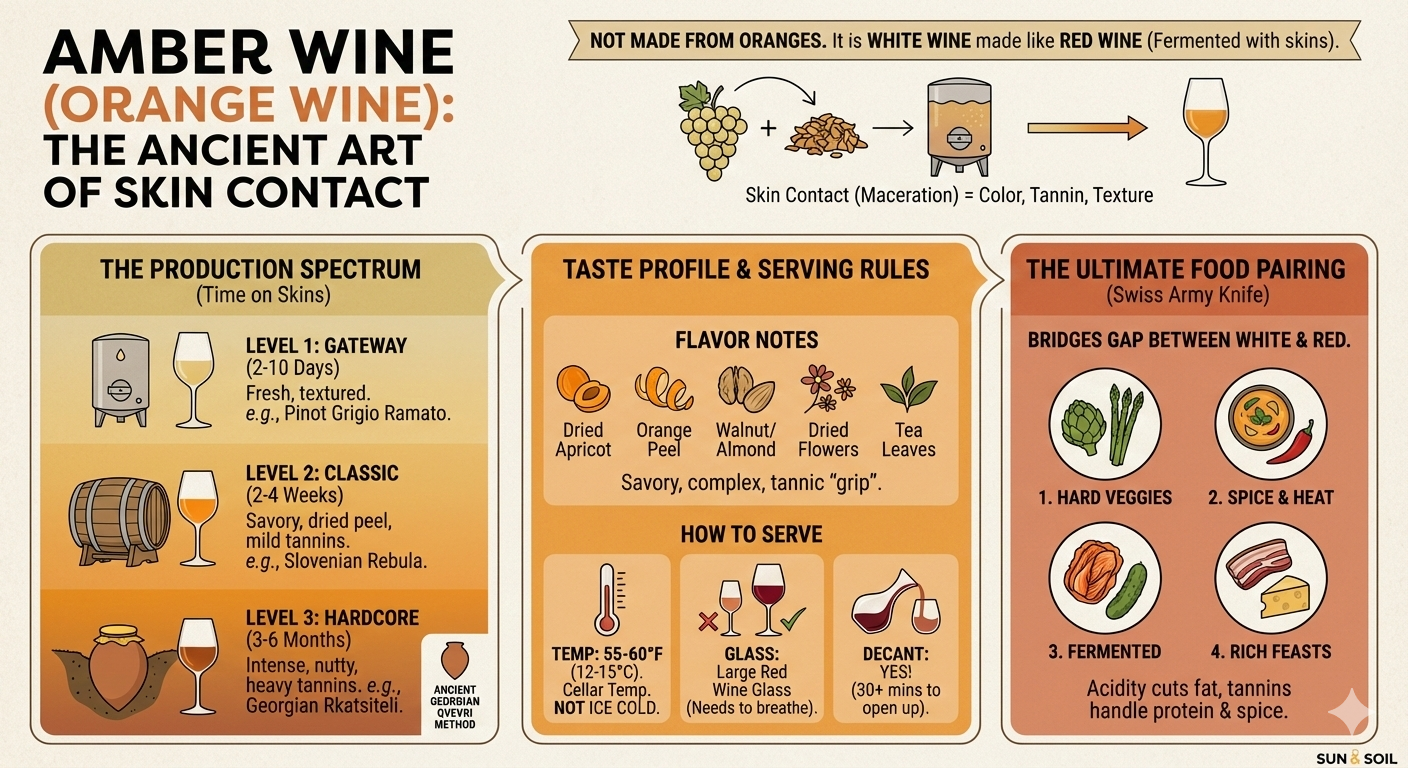
The Story: Roditis is the second most planted grape in Greece. It is a pink-skinned grape that retains acidity well. It is also the traditional base for Retsina. However, when treated as a skin-contact (orange) wine, it transforms into something profound with notes of dried apricot and spice.
🍷 Sun & Soil Selection:
Sant'Or Roditis Orange Amphora: A natural, unfiltered orange wine fermented in clay amphorae. This is how Roditis would have tasted 2,000 years ago.
Kamara Retsina: A modern, natural take on the classic. Infused with fresh pine resin from the winemaker's own forest.
PRACTICAL GUIDE: Drinking Greek
🗣️ Pronunciation Cheat Sheet
-
Xinomavro: Ksee-no-mav-ro
-
Agiorgitiko: Ah-yore-yee-ti-ko
-
Assyrtiko: Ah-seer-tee-ko
-
Moschofilero: Mos-ko-fee-leh-ro
🌡️ Serving Temperatures
-
The Whites (Assyrtiko, Savatiano): Serve cold (45°F/7°C).
-
The Aromatics (Moschofilero, Malagousia): Serve cool (50°F/10°C).
-
The Reds (Agiorgitiko, Xinomavro): Serve at cellar temp (60-65°F/16-18°C).
Conclusion: The Adventure Begins
Greece offers a flavor profile you cannot find in the standard Cabernet/Chardonnay world. It is a land of savory herbs, salt, volcanic ash, and sun-dried fruit.
Whether you are exploring the "acid-black" bite of Xinomavro, the velvet touch of Agiorgitiko, or the rare revival of Santameriana, you are drinking history.

%20or%20perhaps%20a%20vacation%20carafe%20of%20house%20white.%20But%20at%20Sun%20%26amp;%20Soil,%20we%20know%20the%20truth:%20Gree...)